Solar and storage for business, farms and rural properties
Commercial solar for Scottish businesses
Businesses that use electricity during the working day are often the best fit for solar, because much of the power is used on site as it is generated. Offices, workshops, warehouses, garages, shops, hotels and public buildings across Scotland can all be assessed. Large flat or pitched roofs, car park canopies and ground-mounted arrays on spare land are all options. A site survey looks at roof structure and condition, orientation, shading, access and your daytime demand, so the design reflects how your premises actually use energy.
Commercial battery storage
A battery lets a business keep solar power for later in the day, cover demand peaks and use time-of-use tariffs. Sizing depends on your load profile, so the survey team reviews meter data or half-hourly records where they are available. For sites with high evening or weekend use, such as hospitality or retail, storage can make solar more useful. The proposal explains the usable capacity in kWh, where the battery would sit and how it would be controlled.
Farm solar
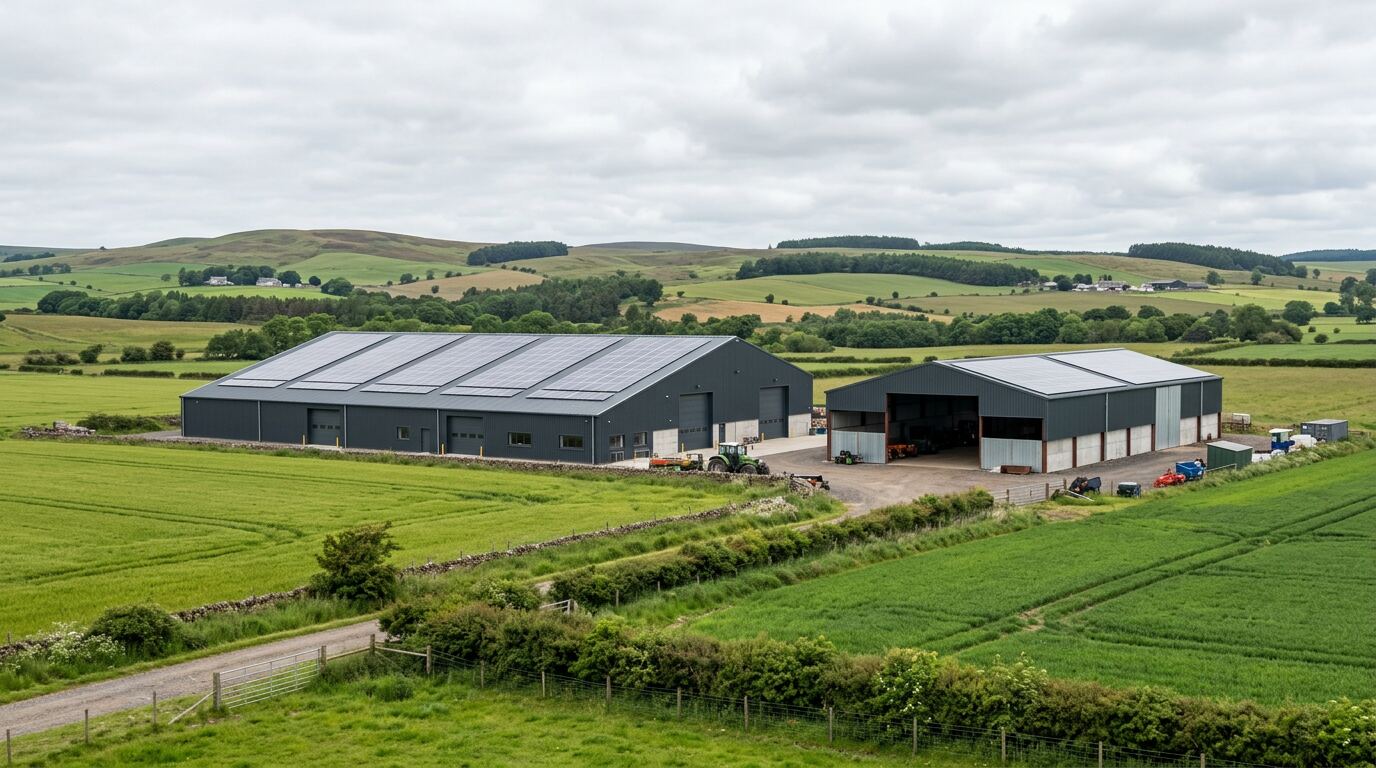
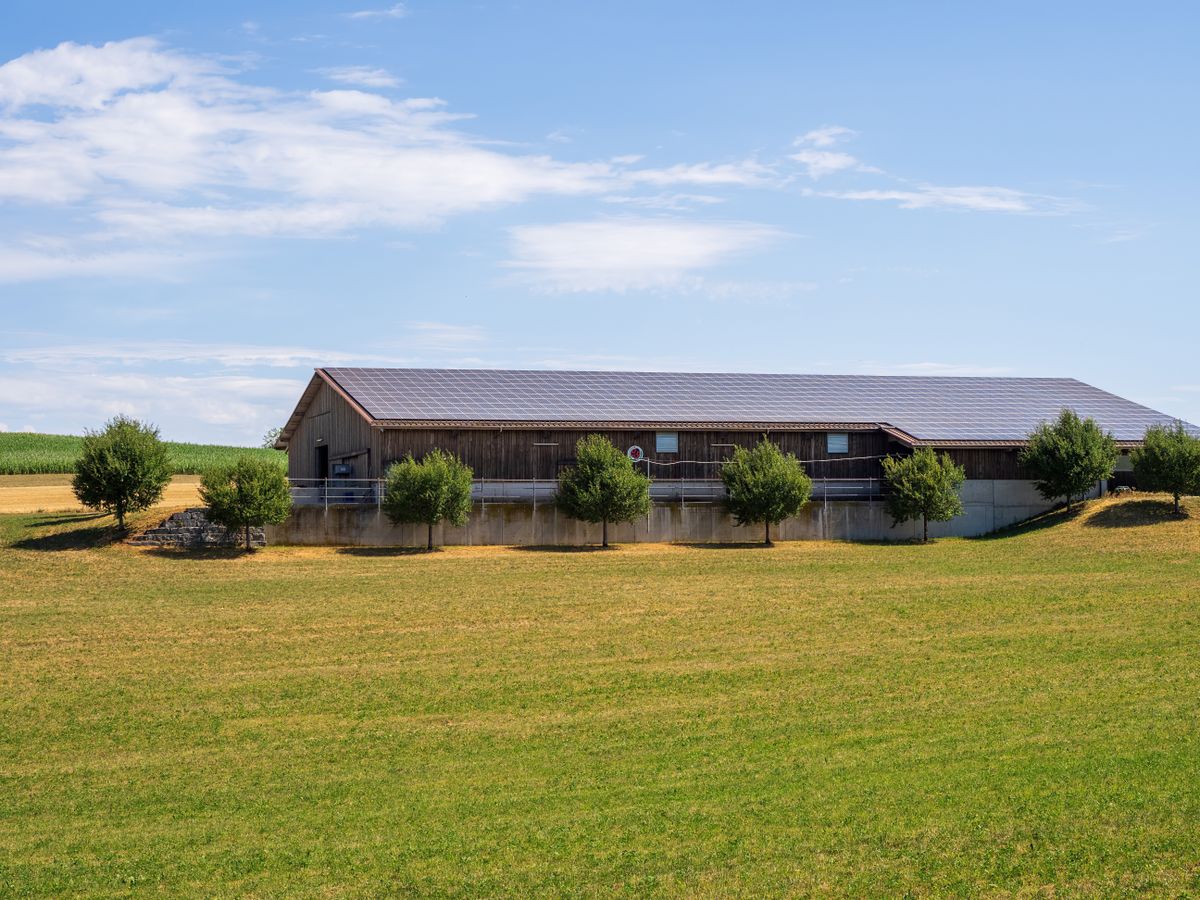
Farms often have large south, east or west facing roofs on sheds, barns, dairies and grain stores, along with steady electricity demand for milking, cooling, drying, lighting and workshops. Solar can be fitted to these buildings or mounted on the ground where land is available. Installation is planned around livestock, machinery movements and the farming calendar, with safe working areas agreed in advance. Many farms also look at a battery so generation can cover early morning and evening work.
Rural properties and estates
Rural homes, estates, holiday lets and remote properties in the Highlands, Islands, Borders and Aberdeenshire often face long grid connections and higher exposure to power cuts. Solar with battery storage can reduce reliance on the grid, and some systems can provide backup power to selected circuits. For properties with several buildings, the survey looks at where generation and storage are best placed and how cables would be routed across the site.
Grid connection, planning and approvals
Larger systems may need approval from the local distribution network operator before connection, and some sites need planning consent or a structural check of the roof. We explain which steps apply to your site and build them into the programme, so the timescale in your proposal is realistic. Where a building is listed or in a conservation area, this is raised early.
How a business project runs
After your enquiry we arrange a site survey at a time that suits you. You then receive a written, no-obligation proposal setting out the equipment, the expected yearly generation in kWh, the electrical work, the programme and any approvals required. If you proceed, installation is scheduled to limit disruption to staff, customers, livestock or production, and the system is commissioned and handed over with full documentation. We install through MCS-certified partners. Interest-free credit up to £30,000, subject to status.