Solar battery installation in Scotland, step by step
How solar battery storage works in a Scottish home
Solar panels generate electricity from daylight, and in Scotland most of that generation happens between spring and early autumn, often while you are at work or out of the house. Without a battery, spare power is exported to the grid and you buy electricity back in the evening. A home battery stores that daytime surplus and releases it when you switch on the lights, cook dinner or run the television. On a time-of-use tariff, the battery can also charge overnight when electricity is cheaper and cover the more expensive evening period. The system switches between charging and discharging automatically, and an app shows you what is happening.
Who a solar battery suits
A battery tends to suit households that already have solar panels or plan to fit them, and that use a good share of their electricity in the evening. Families who are out during the day, people working from home with high daytime and evening use, and homes with an electric car or heat pump often find storage useful. It can also suit rural properties in the Highlands, Islands, Borders and Aberdeenshire, where people want to rely less on the grid. If you rarely use electricity in the evening, or have a very small solar system, a battery may make less sense, and we will tell you so.
The survey process
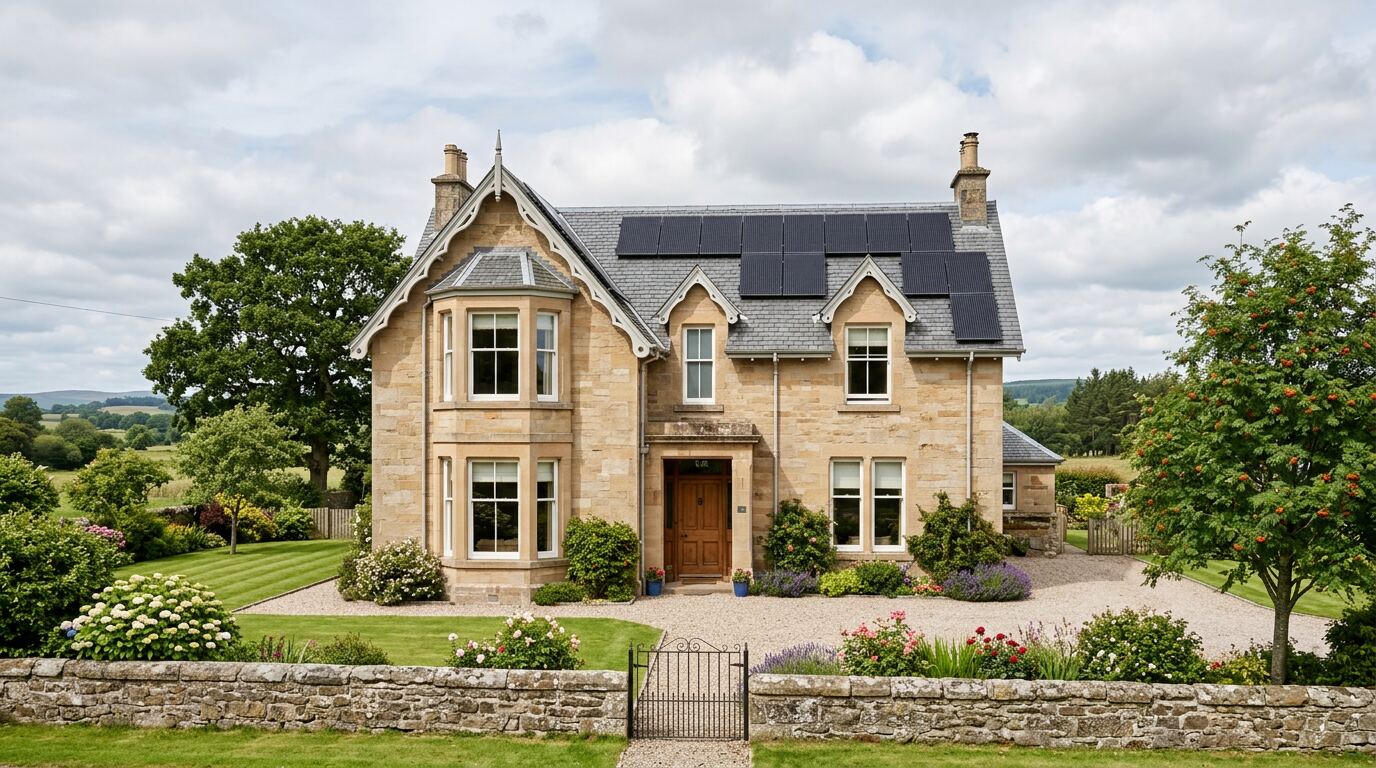
Every installation starts with a survey of your property. A surveyor checks the direction, pitch and condition of your roof, any shading, your loft space, your consumer unit and the route for cables. They agree where the inverter and battery would go, which is usually a garage, utility room, cupboard or sheltered outside wall. They also look at your recent electricity use and ask about your daily routine. Traditional Scottish homes, from sandstone tenements to harled cottages and granite villas, are assessed carefully so fixings and cable routes suit the building. Afterwards you receive a written, no-obligation quote.
Battery sizing questions we will ask
Choosing the right battery capacity is about matching storage to how you live. During the survey we will ask questions such as these, so the recommendation in your quote is based on your home rather than a guess.
- How much electricity do you use between late afternoon and bedtime?
- How large is your existing or planned solar array, and which way does it face?
- Which tariff are you on now, and would you consider a time-of-use or export tariff?
- Do you have, or plan to get, an electric car or heat pump?
- Would you like backup power during a power cut?
- Is there a dry, ventilated space for the battery and inverter?
What happens on installation day
Installation is carried out by our MCS-certified partners. For a battery on its own, the work is often completed in a day. Where panels are being fitted too, scaffolding usually goes up beforehand and the full installation can take one to three days, depending on the roof and the weather. The team works tidily, isolates the electricity safely for part of the day and keeps you informed. Once everything is connected, the system is tested and commissioned, the battery schedule is set to suit your tariff and the installer shows you how the app and controls work.
Aftercare and support
After installation you receive the commissioning paperwork, warranty details and the documents needed to register for an export tariff. If you have questions in the first weeks, call 0141 230 0198 and we will help. Solar panels need little maintenance, but it is worth checking the app occasionally to make sure generation and charging look normal. If something changes, such as a new tariff or an electric car, the battery settings can be reviewed. Health checks and fault finding can also be arranged for systems across Scotland.
Frequently asked questions
Do solar batteries work in Scotland?
Yes. A battery stores electricity from your panels or the grid regardless of the weather outside. In summer it stores spare solar power for the evening, and in winter it can charge on a cheaper overnight tariff and cover the more expensive part of the day.
Can I add a battery to my existing solar panels?
Usually, yes. Most existing solar systems can take a battery, either alongside your current inverter or with a new hybrid inverter. The survey checks your inverter, wiring and space before we send a written quote.
What size battery do I need?
It depends on how much electricity you use in the evening, the size of your solar array and your tariff. The surveyor reviews your usage and routine, then recommends a usable capacity in kWh in your written quote.
How long does installation take?
A battery on its own is often fitted in a day. Solar panels with a battery usually take one to three days, plus scaffolding beforehand. The installer agrees the date and plan with you in advance.
Who carries out the installation?
We install through MCS-certified partners, who commission the system and explain how it works before they leave.