What to know before you get a quote
Why fabric improvements come first
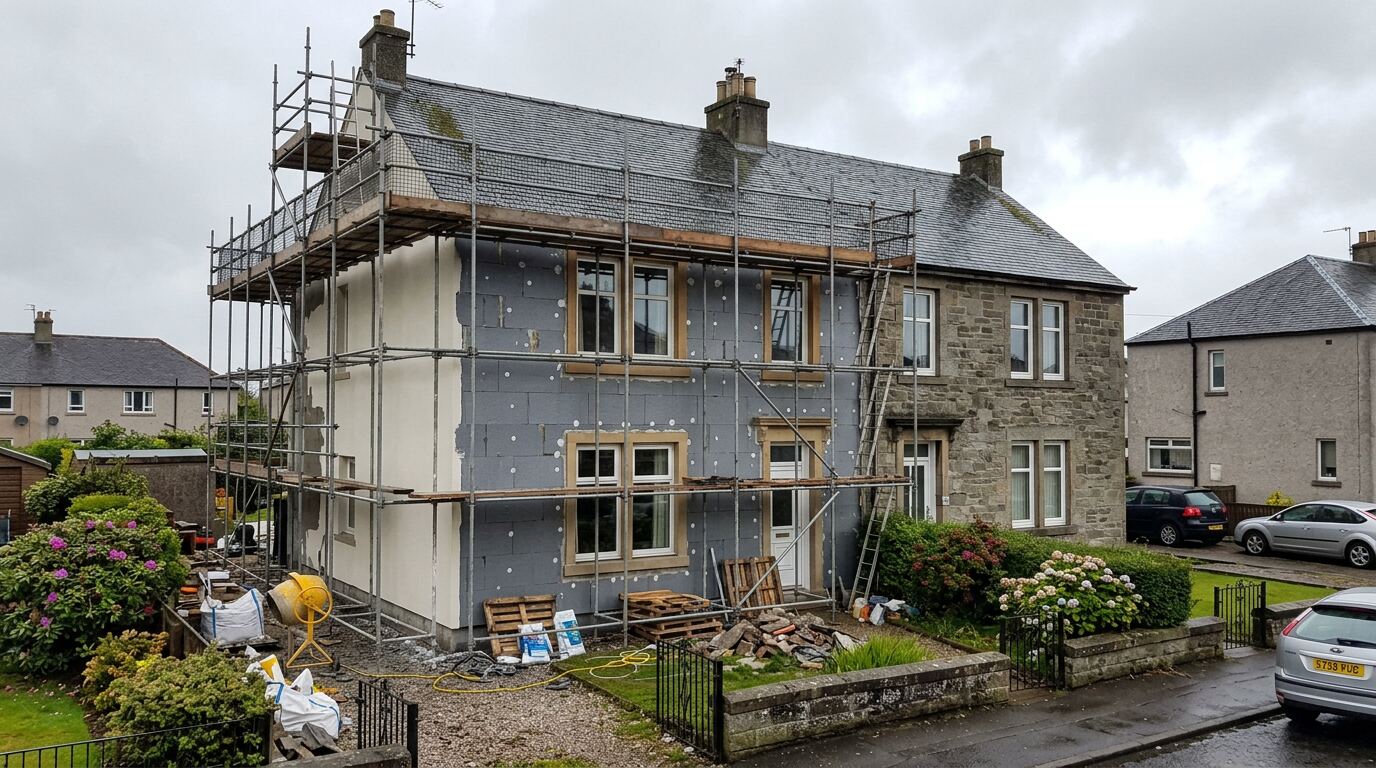
Many Scottish homes lose heat through roofs, walls, windows, floors and draughts. Reducing that loss keeps rooms warmer, makes heating systems work more efficiently and means any future heat pump can be sized correctly. Improving the fabric of the building is often the most sensible first step before larger upgrades.
Traditional Scottish homes
Sandstone tenements, granite houses and harled cottages are built differently from modern homes. Solid walls need breathable materials and careful attention to ventilation, so damp is not trapped. The survey looks at how your home is built and recommends options that suit it, rather than a standard package.
Choosing what to do
Loft insulation, draught-proofing, wall insulation and glazing upgrades all play a part. The best order depends on your home, how you use it and your plans. A surveyor explains which improvements would make the most difference to comfort and the EPC rating, and why.
Working with solar and heating upgrades
Once heat loss is reduced, solar panels, a battery and efficient heating can do more for the household. Planning the steps together avoids doing work twice, such as fitting scaffolding for one job and then again for the next. Your adviser can set out a sensible order in writing.
Your survey and quote
Every recommendation starts with a survey of your property. You then receive a written, no-obligation quote that sets out the work, the materials and the timescale. Interest-free credit up to £30,000, subject to status, if you would like to spread the cost.
Working with us across Scotland
We arrange surveys and installations for homes and businesses from the Borders and Dumfries and Galloway to Fife, Tayside, Aberdeenshire, the Highlands and the central belt. Our team is based in Scotland, so we understand the housing stock here, from sandstone tenements and granite terraces to harled cottages, former council homes and new builds. Weather, exposure and roof type all shape how a system is designed and fitted, and these are considered from the first conversation.
What we will and will not promise
We do not quote standard figures for every home, because results depend on your roof, your electricity use and your tariff. Instead, your written quote explains the expected generation or storage in kWh and the assumptions behind it, so you can check them or ask questions. There is no pressure to proceed and no obligation. If something would not suit your property, we will say so plainly. We install through MCS-certified partners, and the documents you receive after installation explain your warranties.